


Written by Clement Vouillon · First published on Point Nine Land on Medium, May 2017
I’ve noticed that the interfaces of the products I’m using are increasingly invaded by “SaaS enhancers”.




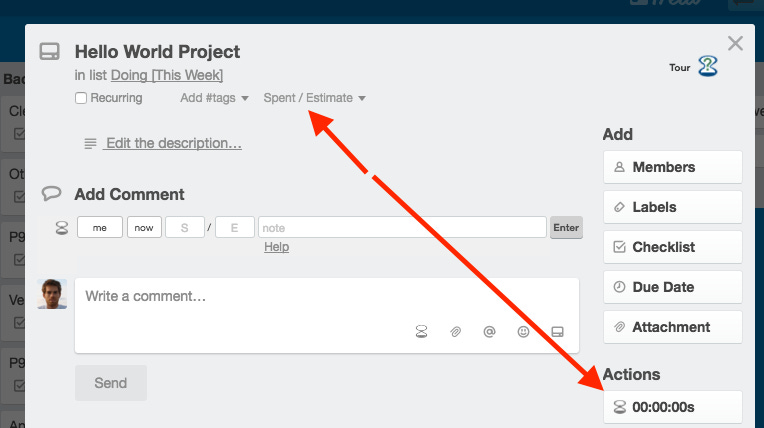
These tools enhance existing SaaS products. It ranges from pure platform plugins such as the Trello one — which will work on Trello only — to services like Clearbit or Grammarly which make their core service available on several existing platforms instead of forcing their users to adopt a new interface.
Here are some thoughts about that trend.
Less “heavy” SaaS and more “enhancers”
In the past months, I’ve tried less “traditional” SaaS products which ask me to adopt a new interface, but I’ve added plenty SaaS enhancers. I think the major reasons are:
It’s time-consuming to set up and to learn a new interface, and I’m less motivated to do it.
Adopting a new interface involves creating new habits. Since I have now plenty “SaaS habits” wired into my brain (compared to a couple of years ago), it’s hard for me to erase them and to create new ones.
The tools I’m using are already highly integrated with my existing product stack, and I’m reluctant to break that.
I’m already collaborating with my colleagues on the major tools I use.
The issue for many SaaS which ask you to use a new interface is that the value they promise does not overcome the frictions cited above. The UX/UI might be better, but often the convenience I’ve built with my existing stack is superior to the value a new product could bring me.
A first taste of the AI-powered virtual workplace (for me at least)
Another aspect that changed in the past couple of months is the rise of “intelligent” enhancers. Platforms plugins are not a new thing, but their approach was mainly focus on improving an existing platform through UI “hacks” or shortcuts. The approach of this new breed of intelligent enhancers is to use the platforms as Trojan horses to deliver their core service and lock the end user.
In my case the best example is Clearbit. I first adopted it as a Google Spreadsheet plugin to enrich data. Then I installed the Gmail plugin for my emails, and I would probably utilize it on other platforms if I needed to. I’m using Clearbit to enhance the tools I’m already using, but it is not platform dependent (It’s me who’s dependent now ;-)).
I call them “intelligent” because many of these tools are not UI “hacks/shortcuts” only but offer a service that brings value based on data (Clearbit) or AI. I’m a Grammarly customer for a couple of weeks and I it’s a fantastic example of the latter.
For me it really tastes like the beginning of the AI-powered workplace.
The second wave of productivity tools?
The first wave of successful SaaS increased people’s productivity by offering prettier and more efficient interfaces (UI/UX) which were also collaborative — people could collaborate on the same tool with shared data. Now that many software categories seem saturated with products based on this model it’s probably time for another wave.
Maybe this second wave will be about increasing people’s productivity thanks to enhancers and not thanks to new interfaces. Ultimately these enhancers will become “invisible.”
Vitamins, painkillers or viruses?
The drawback of many SaaS plugins is their platform dependency. If a platform decides to restrict its access to a plugin or to offer a similar feature, these products are doomed. It’s the reason why many plugins are considered as vitamins and not as painkillers.
But since intelligent enhancers build their foundations on data and AI and make their service available on a variety of platforms, it seems that they are potentially more defensible and can be painkillers. One could even see the smart enhancers not as vitamins or painkillers but as viruses, using their host to grow and grow :-)