



Hi we’re Point Nine Capital and we are currently in SF for the awesome SaaStr ’16. For those who cannot attend the event we’ll share recaps (like this one). To be kept informed follow us on Medium.

Top 10 Learnings Going to (almost) 10 Million
Leo Wildrich — Buffer Co-Founder & COO
1- Experiment with a weekly mastermind with your co-founder in this format
We take around 1–2 hours, preferably when it feels a bit less busy
We talk for 10 minutes each about our achievements like “I shipped this feature” or “I hit the gym 3 times this week”
Then we spend 40 minutes each on challenges. We try to really dive in here and not stay on the surface
We then add a section at the end where we share feedback for each other
2- Avoid being distracted by data too early on
“Most early stage startups won’t have enough customer data to rely on quantitative data. You need to be acquiring hundreds of customers every month (preferably thousands) to have enough data to support A/B tests etc…” Hiten Shah
3- Try asking these 5 questions to learn better from customers
Tell me about how you do _____ today.
Do you use any [tools/products/apps/tricks] to help you get _____ done?
If you could have a magic wand and be able to do anything that you cannot do today, what would it be? Don’t worry about whether it’s possible, just anything.
Last time you did _____, what were you doing right before you got started? Once you finished, what did you do afterward?
Is there anything else about _____ that I should have asked?
4- Keep your data in-house to be more flexible
Buffer’s journey with data:
2010–11: in-house data tools built by Joel
2012: experimentation with various 3rd party event tracking tools (Kissmetrics, Mixpanel)
2013–14: moving back to build all data tools in-house
2015–16: transitioning to using Looker
5- Pick one channel to double down on instead of many (bullseye exercise)

Outer ring: What’s possible — brainstorm all 19 traction channels there are
Middle ring: What’s probable — Promote 3–4 most promising ideas and run tests
Inner ring: What’s working — Focus solely on the 1 channel that’s working
To go further => Traction Book
6- seek conflicting advice from at least 2 mentors on your biggest decision
7- Experiment with changing your prices often as you add value
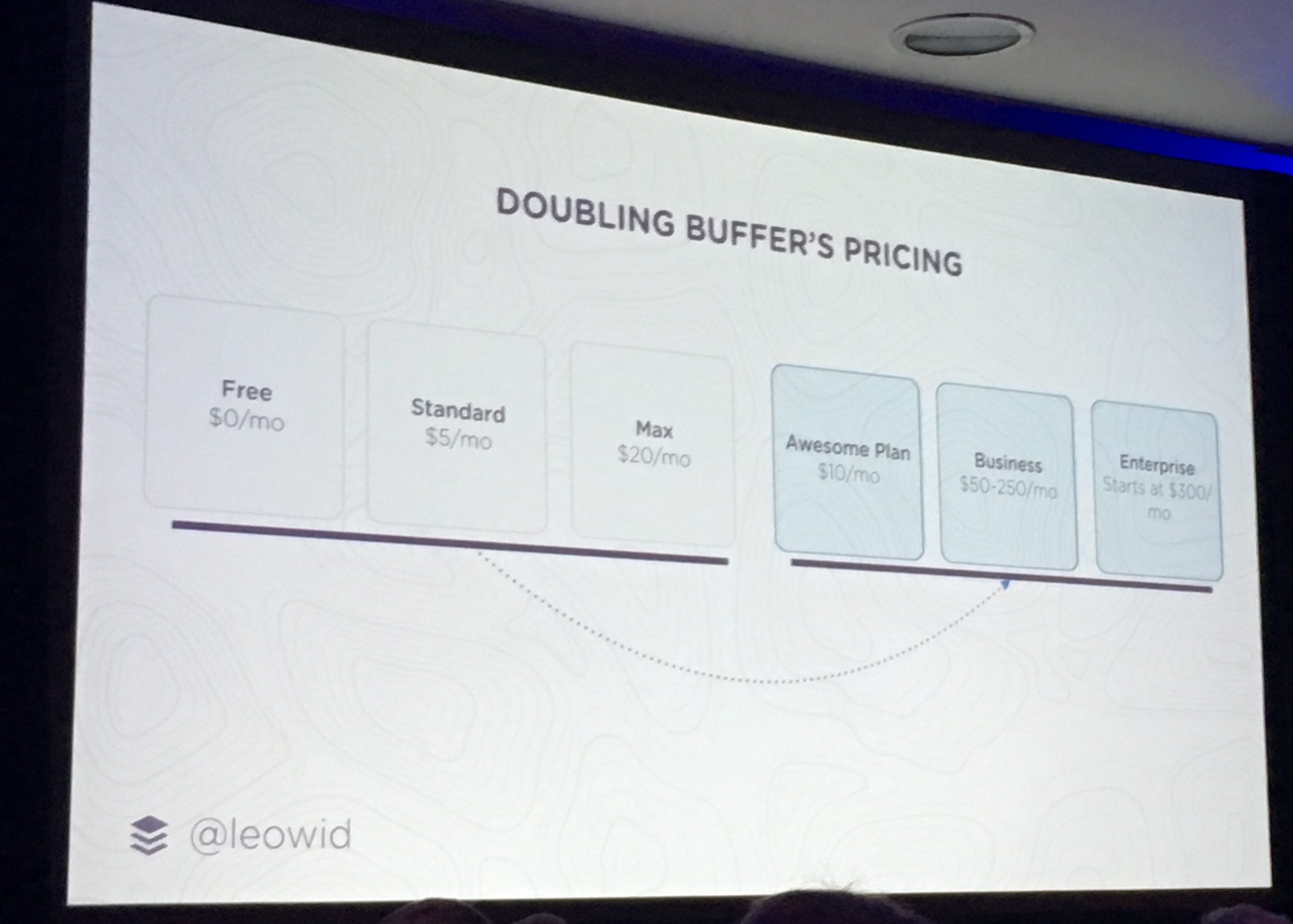
When Buffer changed their Buffer they actually lost no customer for that reason.
8- Use the lean startup methodology for every feature you build, especially post launch
Create a process around it that includes:
Hypothesis for your feature
A customer development phase
An (Invision) clickable prototype to get feedback
A roll-out of working version that embarrasses slightly
Buffer actually has 4 full time employees dedicated to speaking to customers only.
9 when you get an offer to sell, list the experience of personal growth you might miss
What we’d miss out on learning (if we would have sold Buffer):
How to serve tens of thousands of customers
How to let someone go
How to hire key position and train leaders
How to acquire another company
How to raise bigger funding rounds
How to recover from a hack
10 coming soon on open.buffer.com once they’ll really reach $10M ARR

Learnings Getting to 100,000 Paid Subscribers
Charley Moore — Rocket Lawyer CEO
Rocket Lawyer was founded in 2008, bootstrapped until its first 25k paid subscribers. The mission of Rocket Lawyer is let more people have access to legal services.
From 0 to 1000 paid subscribers
1000 first customers = enjoy the moment for a moment. Don’t get too high but don’t get too low. Enjoy the present
customers were mostly individuals
From 1k to 10k paid subscribers
freemium was a big factor in the first explosive growth. They provided legal document for free. Traffic really picked up.
Customers were mostly individuals and not SMBs
From 10k to 25k paid subscribers
This was a turning point in the way that if you break something you make a lot of people mad.
At that point they needed to raise capital to build the platform because the “proof of concept” code was breaking and had too many corners.
This is also when they started to realise that their best customers were businesses (self employed or small business operators) => added an inside sales team
Not only tech needed to be re-built / scaled but also customer support: hired a VP of customer success and opened a customer service center in Utah (today = 50 people completely dedicated to support)
From 25k to 50k paid subscribers
At 50K watch your back, now they will come after you => many people saw now Rocket Lawyer as a threat. You have to be ready (law compliancy, strong processes, be ready to fight when you are pushing the envelop of law, get ready to be sued by competitors)
Double down on your winners. =>Rocket Lawyers started before smartphone took off, it was a desktop app first. When mobile got big they saw a big demand from their users so they had to double down on at.
From 50k to 100k paid subscribers
If you’re not profitable remind yourself why not. Everyday.
You’re not that big yet. Get to a million.